



Don’t risk costly damage or lose your landscaping—choose the most advanced, hassle-free pipe repair available in Sydney.
Why Sydney Chooses Us
- We’ll beat any comparable quote—guaranteed
- 15+ years of proven expertise Sydney-wide
- Quality workmanship, fully licensed & insured
- No-dig, mess-free technology—save your garden and driveway
Facing Frequent Drain Blockages or Pipe Damage?
In Sydney, shifting soils, invasive tree roots, and aging pipes can wreak havoc on your drains—leading to leaks, blockages, or even flooding. Delaying repairs only worsens the problem, potentially causing property damage and costly emergencies.
You have two options:
- Traditional pipe replacement – invasive, expensive, and disruptive
- Trenchless pipe relining – the modern, cost-effective, no-dig solution
Trenchless Pipe Relining Versus Traditional Pipe Repair – What You Need To Know
Do you have frequent drain blockages at your home or business? Or are your sewer pipes damaged because of tree root intrusion?
Pipe problems can happen on any property. They can be caused by general wear and tear of pipes, leakages, or misalignment of pipes because of shifting in soil or tree root growth. Whatever the reason, drain and sewer pipe repair must not be delayed at any cost.
The cracks widen, tree roots dig in deeper and stubborn drain blocks can lead to flooding and burst pipes. So, what do you do when you discover that your pipes may need repair or replacement?
There are two drain pipe repair methods: trenchless pipe relining and conventional pipe replacement. We’re going to go over both, listing their pros, cons and methodology to help you make the right decision for effective, long-term pipe repair.
Factors to Consider: Pipe Relining vs. Pipe Bursting
Before settling on pipe relining or pipe bursting, it’s crucial to assess the unique needs of your property and the specific situation underground.
Professional Plumbing Assessment
First and foremost, a professional plumber’s evaluation is essential. Since pipes are tucked away beneath your property, a trained technician will use tools like CCTV drain cameras to inspect the full length of your pipes. This allows them to see the extent of the damage—from minor cracks to more severe breakages—and recommend the best option.
Key decision points include:
- Extent and Type of Damage:
Relining is ideal for pipes with minor to moderate damage, such as small cracks, leaks, or slight misalignments.
Pipe bursting is more suitable if the pipes have collapsed, are extensively crushed, or have been compromised over large lengths. - Overall Condition and Material of Pipes:
Some materials (like older clay or heavily corroded pipes) may not be candidates for relining and might need to be replaced entirely via pipe bursting. - Pipe Diameter and Length:
Short, accessible sections are often perfect for relining, while bursting may be recommended for long, continuous spans that are extensively damaged. - Layout and Surroundings:
If your pipes are surrounded by landscaping, concrete, or other infrastructure that you’d prefer not to dig up, trenchless solutions like relining or bursting will both avoid major excavation, but relining is less disruptive when pipe condition allows.
The bottom line? A professional diagnosis using modern inspection gear is the most reliable way to pinpoint the cause and choose between pipe relining and bursting. Listen to your plumber’s recommendations—they’ll consider all these factors to determine the most effective and long-term solution for your pipes.
Pros and Cons: Pipe Bursting vs. Pipe Relining
Now, let’s break down the differences between pipe bursting and pipe relining to see which method might suit your situation best.
Pipe Bursting:
This method involves breaking apart the old, damaged pipe while simultaneously pulling through a brand-new section of pipe to replace it. It’s a straightforward solution for pipes that are too badly collapsed or compromised to hold a liner.
Pros:
- Entirely replaces the old pipe with new material (often HDPE, which is highly durable)
- Increases pipe diameter, allowing for better flow
- Works for pipes with serious structural damage
Cons:
- Requires slightly more room above ground for access pits
- Not ideal if there are many utility lines nearby
- Slightly more disruption than relining, but still far less invasive than digging up your yard!
Pipe Relining:
In contrast, pipe relining works by inserting a flexible liner soaked in epoxy resin into the damaged pipe. The liner is inflated, pressed against the existing pipe, and left to harden—essentially creating a “pipe within a pipe.”
Pros:
- No digging needed—just small access points
- Quick turnaround (usually within a day)
- Preserves landscaping, driveways, and structures above ground
Cons:
- Best suited for pipes that aren’t entirely collapsed or crushed
- Reduces the internal diameter of the pipe very slightly
- May not be suitable for pipes with severe misalignment or major breaks
In short, if your pipes are still structurally sound but starting to show their age, relining is typically the least disruptive fix. But if the damage is extensive, bursting delivers a brand-new pipe in the same location, all without a trench running through your prized rose bushes.
Key Differences Between Pipe Relining and Pipe Bursting
Let’s unpack the main distinctions so you can understand which approach suits your needs best.
How Each Method Works
- Pipe Relining: This method involves inserting a flexible liner coated with resin into the existing pipe. The liner is then inflated so the resin adheres to the inside of the original pipe, forming a tough, seamless “pipe within a pipe” once it hardens. It’s ideal for fixing moderate issues like small cracks, leaks, and damage caused by pesky tree roots.
- Pipe Bursting: In contrast, pipe bursting is more heavy-duty. Here, the old, damaged pipe is shattered outward while a new pipe is simultaneously pulled into its place. This technique is chosen when the pipe is too far gone for repairs, like when there is extensive structural failure.
Cost Considerations
Generally, pipe relining tends to be the more economical option. Since it uses existing pipe infrastructure and requires less digging, there’s a big savings on labour, heavy machinery, and site restoration. Pipe bursting, with its need for specialised equipment and full pipe replacement, is usually a bigger investment.
Capacity and Structural Changes
Bear in mind, relining can slightly reduce the inner diameter of your pipe. For most homes, this isn’t a problem, but if your system already struggles with capacity, replacing the pipe via bursting may be the safer path.
Environmental Impact
Both solutions are far less invasive than traditional excavation—your rose bushes and driveway breathe a collective sigh of relief! However, pipe bursting produces more debris, since the old pipe is fragmented during removal, while relining is tidier with minimal waste generated.
Which Should You Choose?
Ultimately, the right choice hinges on your pipe’s condition and the severity of the issue. For everyday leaks and cracks, relining keeps disruption (and costs) low. But if your pipes are crumbling or severely misaligned, bursting, and full replacement may be the way forward. For the final word, consult your local plumbing specialist—they deal with this day in and day out and can point you in the right direction.
What Is Pipe Relining?
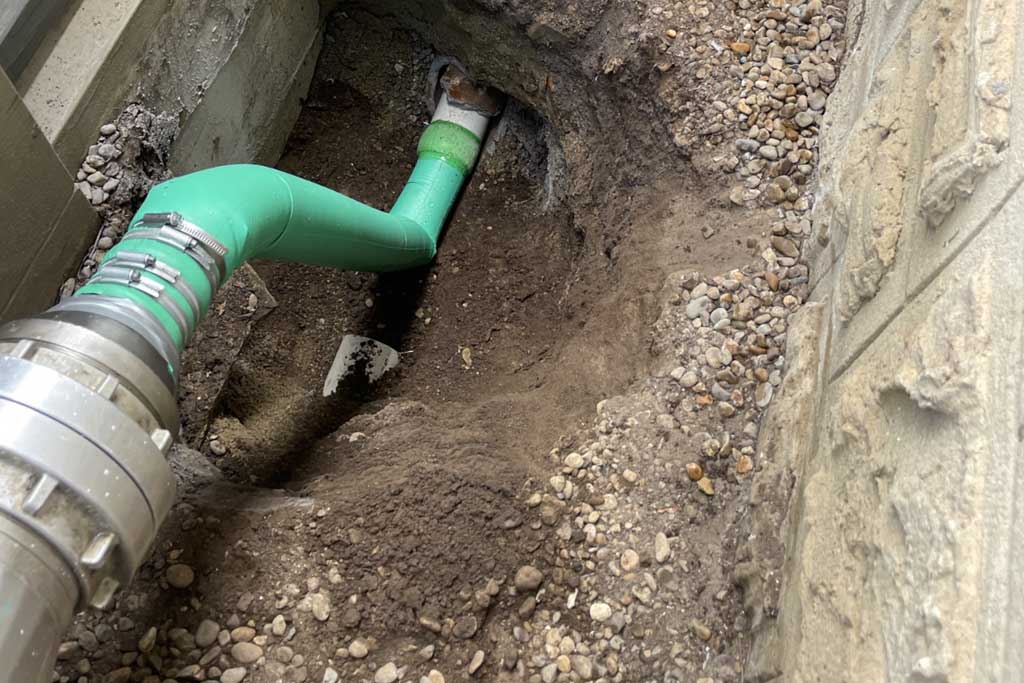
Pipe relining, also known as trenchless pipe repair and pipe rehabilitation, offers no-dig pipe repair for full and sectional pipe repair. It’s affordable, minimally invasive and only takes less than a day.
Pipe relining experts access damaged pipes from above ground, using the manhole or making a small temporary entrance to reach the pipes. CCTV drain cameras are used to pinpoint the location of the leak, blockage or crack and evaluate the condition of the pipe. The live surveillance and recorded images provide a clear, unobstructed view of the drain interior, allowing the plumbing contractors to diagnose precise repair solutions.
High-pressure drain jets are inserted into the drain to clear blockages, dirt, debris or tree roots before commencing repair. Pipe relining technology involves lining the damaged pipe with an epoxy resin and curing it to form a brand new, fully repaired interior!
How Does Pipe Relining Work? Step-by-Step Process
The process is remarkably straightforward yet highly effective:
- Inspection: The first step is a CCTV camera inspection of your plumbing pipes to locate exactly where the issue lies—be it cracks, leaks, or blockages.
- Clearing Blockages: Any obstructions, such as invading tree roots or accumulated debris, are removed using a high-pressure water jet. This ensures a clean surface for the new lining to adhere to.
- Measuring & Preparation: The length and size of the repair area are carefully measured before the actual relining begins.
- Lining Installation: A pipe liner—typically a flexible felt or fibreglass tube saturated with a self-hardening epoxy resin—is inserted into the damaged section. This liner is positioned in place and then cured (hardened), forming a robust new pipe wall inside the old pipe. It seals cracks, leaks, and joints, restoring structural integrity.
- Final Inspection: A second CCTV inspection confirms that the relining has been completed successfully and the pipe is fully functional.
The result? A durable, corrosion-resistant pipe that can withstand future tree root intrusion and the test of time, all without the mess or expense of traditional pipe replacement. It gives you:
How Do Pipe Liners Provide Seamless Repairs?
Pipe relining stands out for its ability to deliver seamless, joint-free repairs—even in pipes with multiple bends or awkward angles. The relining product is designed to mould perfectly to the contours of your existing pipe, creating a continuous, single-piece lining from start to finish.
What does this mean for you? No more weak spots or vulnerable joints where leaks, cracks, or future blockages often begin. Instead, the newly cured liner essentially acts as a brand-new pipe inside your old one, allowing water and waste to flow freely and efficiently. With no joints for roots or debris to latch onto, you get a long-lasting solution that minimises the need for maintenance down the track.
- Completely repaired pipes 4 times stronger than PVC
- Long-term repair with a life span of 50 years
- No disruption to your landscape with unsightly digging
- Economical repair at half the cost of traditional pipe replacement
Why Choose Trenchless Pipe Relining for Long-Term Value?
Opting for no-dig pipe repair is more than just a quick fix—it’s a smart, long-term investment in your property and peace of mind. Rather than facing the upheaval and costs of traditional pipe replacement, trenchless technology lets you resolve plumbing headaches with minimal fuss and future-proof results.
Here’s why it stands out:
- Preserves Your Property: With trenchless relining, there’s no need to dig up driveways, gardens, or walkways. Your landscaping and hardscaping remain untouched, avoiding costly restoration after repairs.
- Reduces Ongoing Costs: Epoxy relined pipes are highly durable, drastically lowering the likelihood of recurring leaks, root intrusions, and blockages. This translates to fewer future repairs and a longer lifespan for your plumbing.
- Environmentally Conscious: No-dig methods generate less waste and disruption to surrounding areas, making them a greener alternative to traditional pipe replacement.
- Enhances Durability: Epoxy resin pipe liners create a seamless, jointless interior that is four times stronger than standard PVC, delivering a robust solution that can last for decades.
Ultimately, you’re not just fixing today’s issue—you’re adding value to your property and ensuring a reliable, efficient plumbing system for many years to come.
Is Pipe Relining an Eco-Friendly Solution?
Absolutely. One of the biggest advantages of pipe relining is its minimal environmental impact compared to traditional methods.
Unlike excavation, which often involves tearing up gardens, driveways, and mature trees—with all the mess and loss of established plant life—pipe relining is a no-dig process. Your landscaping, trees, and outdoor features remain untouched, meaning there’s no need to worry about costly and time-consuming restoration work after repairs.
This method avoids heavy machinery and reduces waste, as it rehabilitates the existing pipe rather than removing and discarding old materials. As a result, less debris ends up in landfills, and less energy is used throughout the repair process.
For property owners who are mindful of their environmental footprint (and their garden’s wellbeing), pipe relining ticks all the boxes: efficient, gentle on your property, and conscious of the bigger picture.
How Does No-Dig Pipe Relining Support a Greener Future?
Choosing no-dig pipe relining does more than just fix your plumbing—it’s a step towards a cleaner, more sustainable environment. Traditional pipe repair often means heavy equipment, lengthy digging, and significant waste, all of which can take a toll on your landscape and the environment. In contrast, trenchless techniques use small access points, minimising the need for excavation and preserving gardens, driveways, and mature trees.
Not only does this reduce the disruption to your property, but it also limits the carbon footprint of the repair process. With fewer trucks and less machinery on site, less fuel is consumed, and emissions are kept low. In addition, pipe relining repurposes your existing pipes by reinforcing them internally, reducing the amount of discarded materials heading to landfills.
The result? A solution that’s both eco-friendly and efficient, saving you money on property restoration and supporting a healthier planet for years to come.
How Does Pipe Relining Benefit Your Health and Safety?
A damaged or leaking pipe is more than just a nuisance—it can actually pose serious risks to your health and home environment. When pipes crack or break, they often allow harmful bacteria and unpleasant sewer gases to escape, which can lead to health issues for your family or employees. These contaminants may cause allergies, respiratory problems, or worse, and nobody wants their home to resemble a science experiment gone wrong.
Here’s where pipe relining steps in as the safer hero. Unlike old-fashioned pipe replacement—which sometimes means wrestling with asbestos-laden piping—trenchless pipe relining seals up cracks and leaks from within, preventing the intrusion of bacteria and keeping toxic gases securely where they belong.
Key health and safety advantages include:
- Reduced Exposure to Contaminants: Keeps sewage, mould, and bacteria from entering your living spaces.
- Elimination of Hazardous Materials: No need to disturb old pipes that could contain hazardous materials like asbestos.
- Minimally Invasive: With no large-scale digging up of lawns or floors, there’s less dust, debris, and disruption, making your environment cleaner and safer during repairs.
So, with pipe relining, you can breathe a little easier—literally and figuratively—knowing your pipes are safely restored without turning your property into a construction site.
What is Pipe Bursting and How Does It Work?
Pipe bursting is another trenchless technology designed for replacing old or damaged pipes, especially when relining just isn’t possible due to severe pipe collapse or extensive damage. Unlike relining, which repairs the existing pipe from within, pipe bursting involves breaking apart the original pipe while simultaneously pulling through a brand new, highly durable replacement.
Here’s how it works:
- A special bursting head is inserted into the old pipe via a small access point.
- As the bursting head moves forward, it fractures the existing pipe outward, clearing the way for installation.
- Behind the bursting head, a new high-density polyethylene (HDPE) pipe is pulled into position.
- The result: a completely new pipeline, with no need for large-scale trench digging or landscape disruption.
Pipe bursting is well-suited for sewer and drain lines made of clay, cast iron, or other brittle materials, and is a go-to solution when you need total pipe replacement with minimal surface disturbance. It’s quick, effective, and often more cost-efficient than digging out and replacing pipes the traditional way.
Real-Life Example: Pipe Relining in Action
To bring all this theory to life, let’s look at how trenchless pipe relining solved persistent pipe problems for a row of terrace homes in Paddington, Sydney—right in the heart of a bustling neighbourhood where digging up the street was hardly an option.
The issue? Years of tree root invasion had led to recurring blockages and endless headaches for owners sharing a single old sewer line. Every storm—or anyone daring to run a dishwasher—risked a messy overflow.
The solution came by way of trenchless relining. Instead of digging anything up, specialists accessed the line through existing entry points, ran CCTV cameras to map out infiltrations, and then cleaned the pipe thoroughly. The magic happened when they inserted a 30-metre epoxy liner along the affected stretch of sewer. This liner, once cured, sealed up cracks and old joints, giving the ageing line a new lease on life, without days of jackhammering or upending anyone’s prized rose garden.
Branch connections weren’t left out, either: using robotic cutters, the team re-opened access points from sidelines after the liner set, ensuring everyone’s plumbing continued to flow smoothly. The result? Peace of mind for decades, all without a trench in sight.
What Can Trenchless Pipe Relining Be Used For?
No-dig pipe repair utilises the latest technology and state-of-the-art equipment for trenchless sewer and blocked drain pipe relining. The pipe relining cost is calculated per metre with the equipment set up and labour charges.
Pipe relining offers long-term repair for both full and isolated sections of the pipes. That means you don’t have to bear the cost of full pipe replacement as compared to traditional pipe repair. Only the broken or damaged area of the pipe is relined.
Small patches with leaks or breaks, misaligned pipes, and cracked junctions can all be easily fixed using pipe relining technology without any digging or mess. It also restores old, worn-down pipes, extending their functionality for another 5 decades.
Are Pipe Relining and Pipe Bursting Environmentally Friendly?
Both pipe relining and pipe bursting are considered environmentally conscious alternatives to traditional excavation-heavy methods. Since minimal digging is required for access, these solutions help preserve your existing landscaping, gardens, and hard surfaces—no need to turn your front yard into a construction zone.
Pipe relining, in particular, stands out for its reduced environmental impact: it rehabilitates pipes from within, leaving surrounding areas virtually undisturbed and creating very little waste. Pipe bursting, while also trenchless, does generate more debris because the old pipe is fractured and displaced as the new pipe is pulled through. However, both methods significantly minimize the ecological footprint when compared to digging up and replacing large sections of pipe, making them preferred choices for homeowners and businesses keen to reduce site disruption and waste.
Pipe Replacement
Pipe replacement requires excavation to reach the damaged pipes and replace them with new ones. It’s time-consuming and labour-intensive, and the costs are double that of pipe relining. Especially if the site is under a building, sidewalk or garden. Appropriate permissions must be taken from the Water Authority, which can take a couple of days. After the replacements, the area has to be re-landscaped, further adding to the cost.
Traditional pipe replacement should only be considered as the last option where the damage is too extensive and cannot be repaired by pipe relining.
Is Pipe Relining The Answer to Your Drain And Sewer Problems?
Pipe relining technology is versatile and economical, having the flexibility to access drain and sewer pipes deep underground without digging. It can reach 90-degree bends, corners and junctions.
Trenchless pipe repair can be used for any type of pipe, including PVC, polythene, asbestos, cast iron, clay and copper. All the equipment is non-invasive, from CCTV cameras to hydro jets and robotic tree cutters.
If you’re looking for permanent, cost-effective pipe repair that increases the life expectancy of your drain and sewer pipes, pipe relining is the perfect solution for you.
Expert Trenchless Pipe Relining Solutions Sydney
Are you looking for an affordable pipe repair service near you?
Ready Set Reline are Sydney’s leading pipe relining experts. We have over 15 years of experience in trenchless pipe repair and rehabilitation, offering reliable pipe repair and maintenance services for residential and commercial properties.
Reach out to us today for more information on our trenchless pipe relining services.
