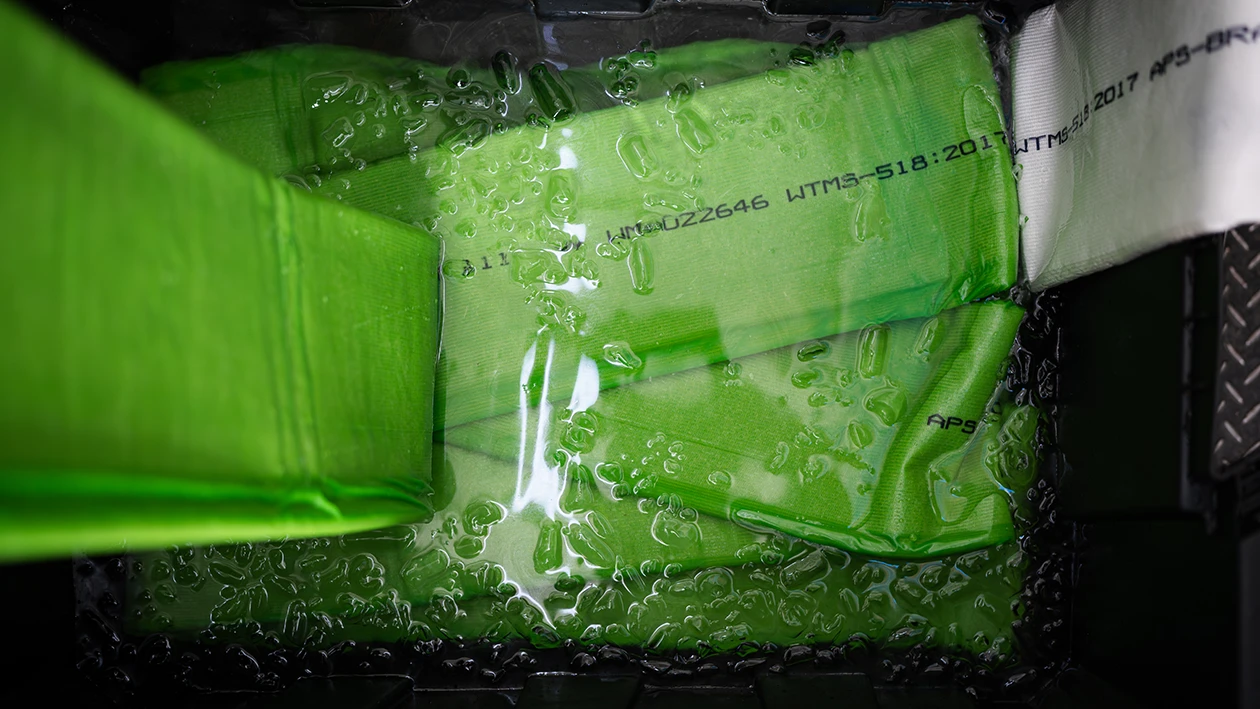
Pipe relining in Sydney costs between $400 and $1,100 per metre, with most complete residential jobs landing between $3,000 and $20,000 once setup and junction work are included. The upfront price is higher than laying new PVC pipe, but relining is usually the cheaper option overall, because you are not paying to dig up and reinstate your driveway, garden, paths or concrete slab afterwards.
This guide gives you Ready Set Reline’s actual rate card, worked examples for typical Sydney jobs, the six things that move the price, and a script for vetting the plumber who turns up at your door. If you are new to the method, our trenchless pipe relining page explains how it works.
How much does pipe relining cost in Sydney, and why is it so expensive?
Across Sydney, relining costs $400 to $1,100 per metre depending on the operator, the pipe diameter and the condition of the line. It is expensive because of the specialised CCTV equipment, robotic cutters and structural epoxy resin involved, and because a liner installed badly can block your connection to the sewer main. Against that, it saves thousands in property reinstatement.
Here is how a real quote is built. These are Ready Set Reline’s rates for the two pipe sizes found in most Sydney properties.
| Cost component | 100mm pipe (most homes) | 150mm pipe (apartments, larger sites) |
|---|---|---|
| Initial setup | $2,500 | $2,600 |
| Relining, per metre | $450 | $600 |
| Junction reinstatement, each | $750 | $900 |
| High-pressure jetting | Included with reline | Included with reline |
| CCTV inspection | Included with reline | Included with reline |
| Follow-up inspection after 12 months | Included with reline | Included with reline |
All figures include GST. They are indicative, and your fixed written price is confirmed after we have inspected the pipe.
Work out your own estimate: setup + (metres × per-metre rate) + (junctions × junction rate).
Some worked examples:
| Job | Calculation | Estimated total |
|---|---|---|
| 5m, no junctions (100mm) | $2,500 + $2,250 | $4,750 |
| 10m, one junction (100mm) | $2,500 + $4,500 + $750 | $7,750 |
| 20m, two junctions (100mm) | $2,500 + $9,000 + $1,500 | $13,000 |
| 25m, two junctions (150mm) | $2,600 + $15,000 + $1,800 | $19,400 |
Jobs over $20,000 on a residential property also require Home Building Compensation insurance in NSW, which adds several hundred dollars. Most houses never get there. Apartment blocks and long commercial runs sometimes do.
Pipe relining cost per metre: what the rate does and does not cover
The per-metre rate covers the liner, the resin and the labour to install that length of pipe. It does not cover getting to site, setting up, cleaning and inspecting the line, or reinstating junctions. Those sit in the setup fee and the junction rate, and the setup fee is the same whether the job is 3 metres or 30, because it takes roughly the same couple of hours either way.
That is why a minimum charge applies to short jobs, and why relining 5 metres does not cost half of relining 10. On our rates a 5 metre reline works out at about $950 per metre all in, while a 20 metre reline works out at about $575 per metre. The smallest realistic full reline lands around $4,750. Below that you are usually looking at a sectional pipe patch rather than a full line.
When you compare quotes, compare the written total, not the per-metre figure. A low per-metre rate with a large or unstated setup fee can cost more than a higher rate with everything itemised.
How much does sewer pipe relining cost in Sydney?
Sewer pipe relining in Sydney is priced the same way as any other drain: setup, metres of liner and junctions. Most Sydney houses have a 100mm sewer in clay or earthenware running 10 to 30 metres from the house to the boundary, and only the damaged section usually needs lining, not the whole run. On our rates a typical 5 to 15 metre sewer reline costs between $4,750 and $9,250 before junctions, with a long run of 20 to 30 metres and two junctions landing between $13,000 and $17,500.
Stormwater lines are priced on the same card. “Drain relining”, “sewer relining” and “pipe relining” are the same job, so if you have been quoted under one name and are comparing against another, you are comparing like with like. What moves a sewer job up the range is depth, tree root ingress at the joints, the number of branch junctions and whether the boundary trap or council connection is easy to reach.
Do this now: estimate your meterage. Walk outside and pace the distance from your home’s main drainage point to the street boundary. That gives you a rough maximum length for a sewer reline. The CCTV footage will show how much of it actually needs lining.
Six things that move the price
1. Length of the damaged section. More metres means more liner and more installation time, though the per-metre cost falls as the setup fee is spread over a longer run.
2. Pipe diameter. A 150mm line uses more liner and resin than a 100mm line and the equipment is heavier, so it costs more per metre. Most Sydney homes are 100mm. Apartment blocks and commercial sites are often 150mm or larger.
3. Junctions. Every branch where a toilet, bathroom or kitchen line joins the main has to be cut open again after lining and sealed. Each one is a separate piece of work.
4. Pipe condition and material. Clay and earthenware pipes with heavy root ingress need more cutting and jetting before a liner can go in. Cast iron stacks in older apartment blocks need descaling first. Concrete and PVC bond differently and cure differently. A pipe that is bellied, where the ground has dropped and the pipe holds water, may need that section excavated and re-laid instead, because a liner follows the shape of the pipe it is installed in.
5. Access. A clear inspection opening or gully at each end is ideal. Tight boundary traps, pipes running under a slab with a single access point, or lines that need a robotic cutter to clear an obstruction first all add time.
6. Depth and site. Deep lines, lines under buildings and sites with traffic management or confined-space requirements take longer to set up safely.
Every one of these is confirmed on the CCTV footage before you get a price, which is why we do not quote relining over the phone.
Relining versus excavation: the total cost comparison
Comparing these on plumbing cost alone is where people get caught out. The digging is rarely the expensive part. Putting everything back is.
| Cost element | Trenchless relining | Excavation and replacement |
|---|---|---|
| Pipe and materials | Liner and epoxy resin | New PVC pipe |
| Labour | Two to three specialists, up to four on large jobs | Full excavation crew |
| Heavy machinery | None | Excavator, spoil removal, skip bins |
| Driveway or paving | Untouched | Broken out and reinstated |
| Landscaping and lawn | Untouched | Cleared and replanted |
| Council permits | Rarely required | Often required |
| Traffic control | Not required | Required for work near roads |
| Time to complete | Usually one day | Several days to weeks |
| Warranty | 50 years | Typically 1 year on new pipe |
| Finished pipe | Seamless, no joints | New joints roots can re-enter |
Best suited to relining: pipes running under driveways, concrete slabs, mature trees, retaining walls, heritage gardens or paved courtyards. Anywhere the reinstatement bill would exceed the plumbing bill.
Best suited to excavation: shallow pipes under open lawn with no obstructions, and pipes that have completely collapsed or crushed, where there is no longer a path for a liner to pass through. Those two lists cover the clear-cut cases. For the jobs that sit in between, our relining versus replacement guide runs through the three questions that settle it, including what to check on the footage before you accept either quote.
What if I only need a patch?
If your CCTV footage shows one isolated crack in an otherwise sound pipe, you do not need a full reline. A sectional pipe patch repairs just the damaged length, typically 0.5 to 1.5 metres, and usually costs $3,000 to $4,500 all up, including GST.
The catch: if the camera shows several faults, patching each one separately costs more than lining the whole run once, and it leaves the untouched sections free to fail later. A good plumber will tell you which situation you are in.
Do I need relining, or just a drain clean?
Quick assessment: if you have recurring tree root intrusions, blockages that keep coming back within a year, wet patches or a lush green strip in your yard that never dries, cracked paths or a small sinkhole, or sewage backing up after heavy rain, the pipe structure itself is compromised. Cleaning will not fix it.
If the only symptoms are slow drains and gurgling, it is most likely a build-up problem. High-pressure jetting will probably clear it and the pipe is likely structurally fine. Book a drain clean, not a reline. If the build-up is kitchen grease and flushed wipes, our guide to dissolving a fatberg in home drains covers what to try before you call anyone.
| Type of blockage | Typical Sydney cost |
|---|---|
| Sink, toilet or basin, reachable from an accessible point | $300 to $700 |
| Main sewer or stormwater line needing high-pressure jetting | $500 to $1,000 |
| Tree roots or hard obstructions needing robotic cutting | $1,000 and up |
Your next step
Book a CCTV drain camera inspection. Relining cannot be quoted accurately without one, because the length, diameter, pipe condition and number of junctions are what determine the price. Any quote given without a camera going down the drain is guesswork.
Across Sydney, a standalone CCTV drain inspection typically costs $250 to $600, depending on the plumber, the length of pipe inspected and whether you get a written report and the footage.
Can you DIY pipe relining?
No. Structural pipe relining needs inversion drums, hydro-jetters, robotic cutters and curing gear, plus precise control of resin curing times, and a botched liner can permanently block your connection to the sewer main. Since doing it yourself is off the table, the useful skill is hiring the right person. Here is what to ask.
The plumber vetting script
Ask these five questions before you accept any quote.
1. “Will you do a CCTV inspection before quoting, and do I get the footage?”
If the answer is no to either part, walk away. They are guessing at the scope, and you cannot compare their quote against anyone else’s.
2. “Is this a fixed price, and what is the setup cost?”
A proper quote itemises setup, metres and junctions and gives you one fixed total in writing, so there are no surprises and you know what the whole job will cost before anyone starts.
3. “Which liner and resin system do you use?”
Listen for a named system such as Brawoliner, and confirm the materials are WaterMark approved and meet AS/NZS 3500. Vague answers about “epoxy” are a warning sign.
4. “What curing method will you use, and how long until I can use my drains?”
Ambient, hot water, steam or UV. Any of these is fine, but a professional will know which one they are using and why.
5. “How many junctions are in this run, and is reinstating them included?”
Junction reinstatement is a real cost. On our rates it is $750 each on a 100mm pipe and $900 on a 150mm pipe. If it is not itemised in the quote, ask whether it has been included or is going to appear later as a variation.
The self-check that matters most
Ask for the warranty in writing, and check it is 50 years. Ready Set Reline provides a 50-year installation warranty plus our Workmanship Guarantee. If a contractor offers a short or vaguely worded warranty, that usually reflects either the materials or the confidence they have in the install. Treat it as a dealbreaker. Also confirm they carry public liability insurance.
The most common expensive mistake
Paying to reline a pipe that has bellied. A belly, or sag, is a section where the ground has dropped and the pipe now holds water. A liner follows the exact shape of the existing pipe, so relining a bellied section gives you a brand new pipe with the same sag in it. It fixes cracks. It does not fix a fall problem.
If your CCTV footage shows standing water in a section of pipe with no blockage, ask specifically whether that is a belly, and what the plan is. That section may need excavating and re-laying to correct the grade.
Pipe relining cost FAQs
What is pipe relining?
Pipe relining is a no-dig method of repairing a cracked, leaking or root-damaged sewer or stormwater pipe from the inside. A resin-soaked liner is fed into the existing pipe through an access point and cured in place, forming a seamless new pipe inside the old one. Most residential jobs are finished in a day with no excavation.
Is pipe relining worth it?
For a pipe that keeps blocking or leaking, almost always. Repeated jetting clears the symptom and not the cause, and two or three call-outs a year soon approach the cost of a patch that lasts 50 years. Relining only stops being worth it when the pipe has fully collapsed and a liner cannot pass through, or when a shallow pipe under open lawn is cheaper to dig up.
How long does a relined pipe last?
A correctly installed epoxy-relined pipe lasts 50 years or more. The cured liner is roughly four times stronger than PVC, with no joints for tree roots to re-enter. It is a permanent structural repair, not a coating, and it carries a longer warranty than newly laid pipe does. Ask for the post-installation CCTV footage and keep it: your insurer may want evidence of the repair, and documented proof of a 50-year relined drain is a genuine selling point when you sell.
Is pipe relining cheaper in Sydney than the rest of Australia?
No. Sydney sits at the upper end of Australian pricing, with published rates mostly between $400 and $1,100 per metre, because of labour costs, the age of the clay and earthenware pipework under established suburbs and the amount of heritage paving and landscaping that would otherwise be dug up. Regional NSW and Queensland quotes often start lower, but the structure of the quote is the same.
Is the quote fixed?
Yes. Once we have inspected the pipe you get one written price covering setup, liner, junctions, jetting, CCTV and the 12-month follow-up inspection. What we quote is what you pay, even if the job turns out trickier than expected.
Can I spread the cost?
Yes. Homeowners can reline now and spread the cost of eligible work over $1,000 through HomePro Credit. Pre-qualification is free, non-binding and does not affect your credit score. See Fix Now, Pay Later for how it works.
Get an accurate figure for your property
The tables above will get you a realistic ballpark. For an exact number, the pipe needs to be inspected, because length, diameter, access and the number of junctions are what move the price.
Ready Set Reline quotes from the CCTV footage, gives you a fixed written price before any work starts, and will beat any comparable written quote by 10%.