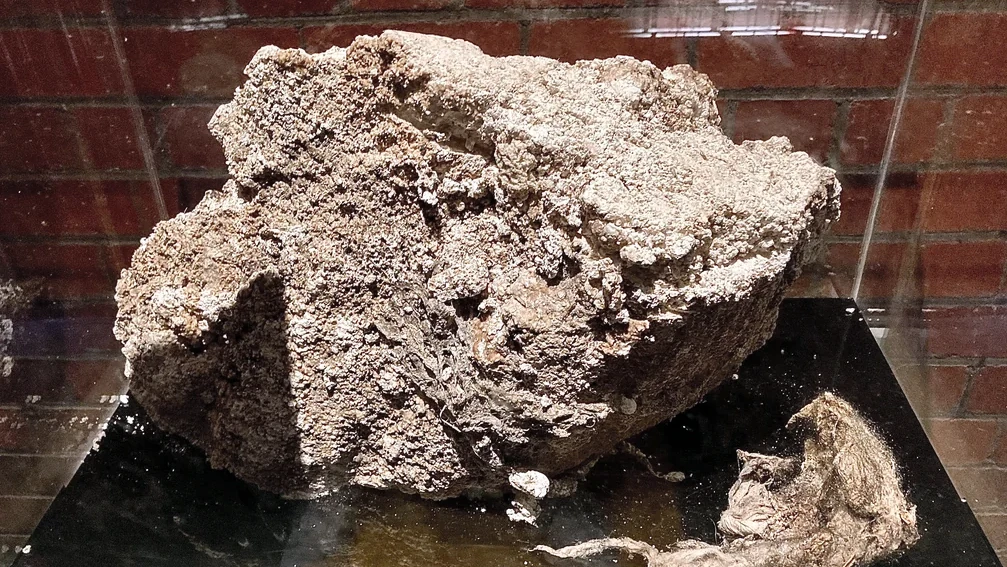
A fatberg is a rock-solid, congealed mass inside a sewer or drain, formed when non-biodegradable solids like wet wipes bind together with cooling grease and cooking fat. In homes they cause backed-up drains, sewage odours through the house, and enough internal pressure to damage the pipe itself.
They are not just a London tabloid story. Sydney Water pulls around 500 tonnes of flushed wet wipes out of the wastewater system every year, and roughly 75 per cent of wastewater blockages involve wipes. Most of that starts in someone’s house.
Why does my house suddenly smell of sewage or rotten eggs? (And is it safe?)
Three things cause it. A dried-out trap under a fixture you never use. A cracked or broken sewer line. Or a fatberg pushing sewer gas back up the drain.
Work out which level you are dealing with before you do anything else.
| Level | What you are seeing | What to do |
|---|---|---|
| 1. Mild and localised | Smell isolated to one sink, shower or floor waste you almost never use. Drains elsewhere run normally. | Run water into every unused drain for 60 seconds to refill the traps. Check again in two hours. Often that is the whole fix. |
| 2. Moderate and spreading | Smell in more than one room. Drains slow but still flowing. Toilets gurgle when a nearby fixture drains. | Work through the dissolving protocol below. |
| 3. Severe | Overwhelming rotten egg smell. Sewage backing up into a shower base, bath or laundry tub. Water rising in the overflow relief gully outside. Headaches or nausea in anyone at home. | Get everyone out of the affected area and call an emergency plumber. Concentrated sewer gas is toxic in enclosed spaces and flammable at higher concentrations. |
Do these three things now, regardless of level
- Open windows on both sides of the house and get cross-ventilation going.
- Pour about four litres of water down every drain in the house, including the guest bathroom, the laundry trough and any floor wastes.
- Go outside and look at your overflow relief gully, the short grated pipe near the house at ground level. If there is standing water or waste sitting in it, the blockage is downstream of the house and you need a drainer, not a bottle of cleaner.
How can I dissolve a fatberg in my home drains?
You break the lipid bonds holding the mass together using heat, bio-enzymatic cleaner and physical agitation, in that order. Harsh caustic drain cleaners often make things worse, because lye reacting with fat is a soap-making reaction (saponification). You can turn a soft grease mass into a hard soap plug that is genuinely worse to remove.
The four-step protocol
1. The hot flush. Boil two large pots of water and pour them slowly into the affected drain in stages, letting the heat work through the outer layers of grease. One caution most articles skip. If you have PVC waste pipes, use very hot tap water rather than a rolling boil. PVC drainage pipe is only rated to 60°C, which we explain in our guide to clearing a blocked shower drain.
2. The enzyme application. Pour roughly 500ml of a bio-enzymatic or bacterial drain product down the drain. Actizyme granules, Bio-Clean and similar products are sold in most hardware stores and supermarkets. Do this immediately before bed. The bacteria need six to eight hours of zero water flow to actually digest the fat and organic matter. Dose it at 7pm and run the dishwasher at 8pm and you have just flushed your money into the main.
3. The pressure plunge. Next morning, fill the sink with about 50mm of hot water and plunge hard for a full 60 seconds. Use a flange plunger (the one with the soft rubber sleeve that folds out), not a flat cup plunger. Block the overflow hole with a wet cloth first, otherwise you are just pumping air in a circle.
4. The flush-out. Run hot tap water for ten solid minutes to carry the loosened debris out to the main line. Ten minutes feels excessive. It is not. Half-dissolved grease that stops moving simply re-sets somewhere further along the pipe.
Try this now: find the slowest draining sink in the house. Pull out whatever drain cleaner is sitting under it and read the label. If it contains sodium hydroxide or caustic soda, put it aside. Buy an enzyme product instead.
Common mistakes
- Bleach. Kills the smell for a few hours and does nothing to the fat.
- Caustic soda. This is not a hypothetical risk. Laboratory analysis of the Whitechapel fatberg found its structure was saponified free fatty acids, described under the microscope as harder solid particles and sewer debris encased in a softer soap-like matrix. That is the same soap-forming reaction you set off when you tip lye onto a grease mass. You can manufacture a small version of the problem inside your own pipe.
- Repeat dosing. Three rounds of chemical cleaner in a week is not persistence, it is a sign the blockage is structural.
How you know it worked
Water should drain immediately with a visible whirlpool, not sit and sink slowly. The sulphur smell should be completely gone within 24 hours, not just fainter. If either of those fails, or the problem returns within a few weeks, the cause is not loose grease.
When it is not a fatberg
Recurring blockages are a pipe problem, not a flushing problem. Roots at a cracked joint. A bellied section holding standing water. An old earthenware line that has cracked and is catching debris. Grease then builds around whatever is already there, so clearing it buys a few months at best.
There is good evidence for this. The Water UK blockage study also recorded why each blockage formed where it did. Of the 24 blockages with enough site information to assess, 11 had formed at features that are integral to a normal, serviceable sewer: backdrop pipes, bends, interceptor traps (the UK name for what Sydney calls a boundary trap) and stretches with low or intermittent flow. The pipes were otherwise fine. Blockages are not random events. They repeat in the same spot because something about that spot catches material, which is exactly why clearing the same line twice in a year is a reason to book a CCTV drain inspection rather than another clean.
A camera tells you which of the three you have. That decides whether the pipe gets patched, relined or replaced. Where roots or hardened obstructions are the problem, robotic cutting clears them out first, and high-pressure jetting strips the remaining grease off the pipe wall.
What are fatbergs made of, and what do they smell like?
Two ingredients do nearly all the damage. FOG (fats, oils and grease) tipped down the kitchen sink, and synthetic items flushed down the toilet, mostly “flushable” wet wipes, but also sanitary products, cotton buds, dental floss and paper towel.
Someone sent a piece of one to a lab. Cranfield Water Science Institute analysed a sample of the Whitechapel fatberg for the Museum of London in January 2018 and found the fat fraction was 53 per cent palmitic acid and 18 per cent oleic acid, with myristic, linoleic, stearic and palmitoleic acids making up the rest in single digits. That profile matches palm oil, butter, beef fat and chicken fat, which led the authors to conclude that the free fatty acids forming the deposit came mainly from cooking residues and cooking activities. In other words, the fat in a fatberg comes out of the kitchen, not out of the sewage. Under the microscope it was grit and sewer debris set into a soap-like matrix. A fatberg is, chemically, a bar of soap with rubbish inside it. The full lab report is public.
The grease coats the pipe wall as it cools. The wipes, which have plastic fibres and do not break down, catch on that coating and rope together. Every subsequent wipe catches on the last one. The mass grows inward until flow drops, and once flow drops, everything else settles out too.
What they smell like: an overwhelming mix of rotting meat, neglected public toilet, rotten eggs and rancid oil. It is bacteria at work. Sealed inside the grease with no oxygen, they break down organic matter and produce hydrogen sulphide.
As for which wipes are actually doing it, the Water UK study is worth a second look. Crews pulled apart 54 real blockages and weighed what was in them.
| Product recovered from blockages | Share by weight of identifiable products |
|---|---|
| Baby wipes | Over 75% |
| Surface wipes, cosmetic removal wipes, feminine hygiene products | Roughly 20% |
| Products actually designed to be flushed | About 1.9% |
Products designed to be flushed came to just 0.88 per cent of the total sample weight. The report notes that weaker material breaks up during recovery, so the true figure is somewhat higher than that. Even allowing for it, the culprit is almost never the packet marked flushable. It is the baby wipe, the makeup wipe and the kitchen surface wipe that someone decided was close enough.
Key takeaway: “flushable” only means the wipe fits through the S-bend. Put a bin next to every toilet and hold a strict toilet paper only rule. In the kitchen, let pan fat cool, scrape it into the bin, and wipe greasy pans with paper towel before they hit the sink.
What is the biggest fatberg in the world?
Household fatbergs are the small end of the scale. In the mains, they get genuinely monstrous.
Whitechapel, London, 2017. The benchmark. A 130-tonne mass of cooking fat and sanitary products formed under Whitechapel, roughly the weight of 11 double-decker buses, described by Thames Water as rock solid and compared to breaking up concrete. It ran 250 metres, about twice the length of a football pitch at Wembley.
Wallan, north of Melbourne, 2020. Australia’s headline example. Yarra Valley Water found a 42-tonne fatberg, two tonnes heavier than an average petrol tanker, which took workers nine hours to dislodge and remove. It was found in April 2020, the same month the utility reported a 20 to 30 per cent rise in wet wipes, rags, tissues and paper towel being flushed across its network.
A bit of history. Fatbergs themselves are modern, since they need synthetic wipes and industrial cooking oils to form. London’s sewer crises are not. The Great Stink of 1858 came from raw sewage in the Thames, and the intercepting sewer network built in response, designed by Joseph Bazalgette, still carries a good deal of the city’s waste. The same Victorian brickwork now hosts the fatbergs.
The short version
Refill your traps first, because a dry trap is the most common cause of a sudden sewage smell and it costs nothing to rule out. If the smell is spreading and drains are slow, work through heat, enzymes overnight, plunging and a long flush. Skip anything caustic, because the chemistry works against you. And if the blockage keeps coming back in the same line, stop treating the symptom and find out what the pipe is doing.
Think you have a fatberg? Call Ready Set Reline
If the smell keeps returning, the same drain keeps blocking, or sewage has come up through a gully or a shower base, the problem is in the pipe and no amount of enzyme powder will fix it. We put a camera down the line, show you the footage, and tell you exactly what is causing it before you spend a cent on repairs.
Ready Set Reline is based in Roseville and works right across Sydney, from the North Shore and Northern Beaches to the Eastern Suburbs, Inner West and Hills District. You get a fixed written price before we start, a 50-year warranty on the reline, and our promise to beat any comparable written quote by 10 per cent.
Call 0422 704 670 or send us a message and we will get a camera on the problem.