



Protect Your Home & Garden — No Excavation, No Mess
Pipe troubles in Sydney can hit hard—whether it’s a burst pipe under your Bondi driveway or a blocked drain in your Manly backyard. Traditional repairs mean days of digging and disruption. With Ready Set Reline’s advanced UV pipe relining, you get a permanent fix in under an hour—without tearing up your property.
Why Choose Ready Set Reline?
- Ultra-Fast Repairs: UV curing technology restores most pipes in less than 60 minutes—so your water is back on the same day.
- Zero Landscape Damage: No digging means your lawns, patios, and driveways stay intact.
- Built to Last: Reinforced pipes with a 50-year lifespan, covered by our workmanship guarantee.
- Transparent, Competitive Pricing: We’ll beat any comparable Sydney quote. No hidden fees—ever.
- Trusted by Locals: 200+ Sydney homeowners—from Parramatta to Surry Hills—have rated us 5 stars for reliability and speed.
“We had a major leak under our heritage-listed terrace. Ready Set Reline relined the pipe in a single morning—no mess, no fuss.”
> — Sarah K., Glebe
How Does UV Pipe Relining Work?
Instead of digging, we insert a resin liner into your damaged pipe and cure it in minutes with specialised UV light. The result? A seamless, rock-hard pipe interior that resists Sydney’s notorious tree roots, corrosion, and future leaks—perfect for local clay soils and unpredictable weather.
Act Now — Stop Small Leaks from Becoming Costly Emergencies
Same-day emergency slots available across Sydney.
Proudly serving all of Sydney—rain or shine.
Not sure if pipe relining is right for your home? Contact us with your questions, or download our free homeowner’s guide to pipe relining.
What is Pipe Relining?
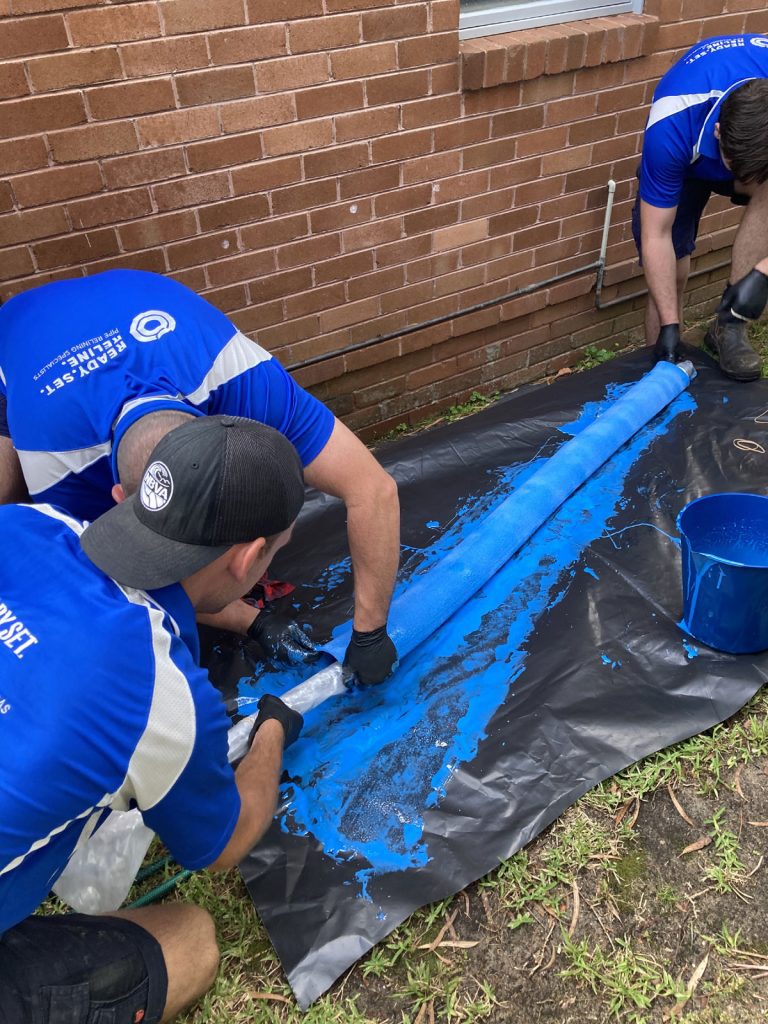
Pipe relining, also known as CIPP (cured-in-place pipe) lining, creates a brand-new pipe inside your old one. A poly woven, felt, or fibreglass liner is soaked with epoxy or resin and inserted into the damaged pipe. The liner is cut to the same length and dimension as the damaged pipe and inflated with compressed air. This is then cured into place using air (ambient curing), hot water, or steam. Ambient curing takes about 10 to 12 hours to set, and hot water curing takes 4 to 5 hours.
What Factors Affect the Cost of Pipe Relining?
Like most plumbing solutions, the cost of pipe relining can vary based on a few key factors. If you’re wondering why one quote looks different from another, here’s what typically influences the final bill:
- Length and Diameter of the Pipe
Longer pipes, or pipes with a larger diameter, need more liner material and resin, which naturally bumps up the price. - Extent and Location of Damage
Are you patching up a tiny section or an entire run? Limited damage will be on the lower end, while multiple breaks or widespread issues will require more work and resources. - Accessibility of the Pipes
Pipes buried deep beneath a driveway or hidden under a slab are trickier and time-consuming to reach, making the job pricier. Pipes with easier access mean a simpler, more cost-effective repair. - Pipe Material and Condition
Old clay or cast iron pipes often need extra attention to prep and clean, especially if roots have wormed their way in, or internal corrosion is present. PVC pipes without significant corrosion are generally more straightforward (and less costly) to reline. - Type of Relining Technology Used
Advanced methods like UV curing can be faster and cleaner, but might cost a bit more up front than standard ambient or heat-cured options. However, faster curing could mean less disruption and downtime for you. - Additional Repairs or Preparatory Work
If the existing line needs CCTV inspection, high-pressure water blasting, or root removal before relining, this will also affect the overall cost.
It’s wise to get a detailed quote that spells out exactly what’s included, so you’re not surprised by add-ons down the track. With these factors in mind, you’ll have a better idea of what goes into your pipe relining investment.
Pipe Relining vs Pipe Patching: The Key Differences
Now, you might be wondering how pipe relining stacks up against another popular repair method, pipe patching. While both aim to fix leaks and cracks, they take quite different approaches—and produce distinctly different results.
Pipe patching is more of a “spot fix,” targeting a small section of damaged pipe. Think of it as placing a bandage over a single problem area. A patch (usually resin-impregnated fibreglass) is applied only over the crack or hole, sealing it off and preventing further leakage. It’s quick, cost-effective for minor damage, and ideal when the majority of your pipe is still in good condition.
Pipe relining, on the other hand, provides a complete overhaul. Rather than merely patching a trouble spot, the entire length of the compromised pipe is lined with a new, seamless layer. This creates a robust internal pipe from end to end, protecting the entire section against leaks and future root intrusions. Although it requires a slightly higher investment upfront, relining addresses widespread or multiple issues within the same run, essentially giving your pipes a new lease on life for decades.
In short:
- Pipe patching: Best for isolated, minor cracks or holes.
- Pipe relining: Ideal for pipes with extensive damage or multiple problem areas, ensuring long-term reliability.
Understanding the scope of your pipe issues will help you decide which solution best suits your needs.
What’s Involved in a CCTV Pipe Inspection—and Why Does It Matter?
Before any relining magic happens, a thorough CCTV pipe inspection is the unsung hero. Imagine a plumbing detective mission—using a diminutive, high-resolution camera, specialists explore the inner world of your pipes from end to end without disturbing your garden beds or digging up driveways. This clever gadget snakes through residential, commercial, or industrial pipes, capturing real-time footage and pinpointing every crack, blockage, or mischief-making tree root along the way.
But why is this step so crucial? Here’s the scoop:
- Accurate Diagnosis: By precisely mapping out the location and extent of pipe damage, no issue gets missed (or misdiagnosed).
- Tailored Solutions: Armed with clear visuals, technicians can recommend the most effective repair method—be it ambient, hot water, or UV curing—for your specific pipe woe.
- Peace of Mind: You get a transparent view of what’s happening underground, often with video evidence you can watch, so there’s no guesswork and no unnecessary work.
Regular CCTV inspections are like routine health checks for your plumbing. They not only catch existing faults but also help identify potential trouble spots before they become emergencies. This means fewer surprises—and more years of worry-free water flow.
Can Electrical Conduits Be Relined?
Absolutely! Just as with plumbing pipes, electrical conduits can also benefit from modern relining techniques. If your underground or in-wall electrical conduits are suffering from cracks, intrusions, or blockages, relining provides a non-destructive solution that avoids the need for ripping up floors or walls.
The process is similar to traditional pipe relining. A specialised, non-conductive liner—often made from felt, fibreglass, or a composite material—is soaked with a tailored resin. This liner is then inserted into the existing conduit, navigated into place, and cured to form a seamless new pathway for your wiring. Importantly, the resins and liners used for electrical applications are engineered to provide high dielectric strength and resist heat, ensuring ongoing electrical insulation and safety.
This approach is particularly helpful in commercial buildings, older facilities, and infrastructure where electrical downtime is costly or disruptive. Leading global infrastructure brands such as Insituform and Aegion have adapted these methods specifically for electrical and communications conduits, resulting in minimal service interruption and long-term reliability.
In summary, relining electrical conduits is not only possible but also offers a cost-effective, efficient, and future-proof upgrade, keeping your cables protected and the power flowing without turning your property into a construction zone.
How Long Does It Take to Unblock a Drain?
Unblocking a drain is often much quicker than you might expect. For most routine blockages, like those caused by a buildup of kitchen fats or the classic wad of bathroom hair, a plumber armed with a plunger or drain snake can have water flowing freely again in as little as 30 minutes to an hour.
More stubborn blockages—perhaps those deeper in the pipe or caused by tree roots—may take a bit longer. In these cases, professionals use advanced tools like high-pressure water jetters or CCTV drain cameras to both identify and eliminate the obstruction. Even then, most jobs are wrapped up within a few hours.
If the blockage signals more serious damage, such as a collapsed pipe or persistent root intrusion, it may be a sign that pipe relining or replacement is needed. But for standard household clogs, you’ll be back to normal life before the kettle’s finished boiling for your next cuppa.
Now, let’s take a closer look at how UV pipe relining takes pipe repair to the next level…
What is UV Pipe Relining?
UV relining is the same as conventional pipe relining with one key difference. This relining method uses ultraviolet rays to cure the liner for instant results. When the resin-soaked liner is inflated inside the old pipe, UV light machines are deployed to activate the resin, hardening it as it moves along the interior.
Other than getting instant results, UV pipe relining offers many other advantages when compared to heat and ambient curing methods and conventional pipe repair. These benefits include:
Structural Repairs—Even Without an Intact Pipe
One of the most impressive features of UV pipe relining is its ability to restore structural integrity, even when sections of the original pipe are missing or severely degraded. If your existing pipe is partially collapsed, crumbling, or riddled with gaps, the UV-cured liner essentially forms a freestanding new pipe within the old alignment. It doesn’t rely on the structural strength of the damaged host pipe. Instead, the cured liner is engineered to provide a robust and self-supporting solution, bridging voids and reinforcing weak spots—all without the need for a complete pipe replacement or messy excavation.
Superior Resistance to Corrosion and Chemicals
So, what gives UV-cured liners their impressive durability against corrosion and harsh chemicals? It all comes down to the materials and the curing process. UV-relined liners are typically made from robust materials like fibreglass or polyester that are specially engineered to withstand aggressive environments found in drain and sewer systems.
Here’s how it works:
- Material Composition: These liners are fabricated using corrosion-resistant composites, such as ECR (E-CR, or “chemical-resistant”) glass fibres and polyester or vinyl ester resins—a combination renowned for high chemical tolerance. These are the same kinds of materials trusted in industries like wastewater treatment and chemical processing, where long-term durability is non-negotiable.
- Seamless Bonding: When the liner is inflated and cured inside the old pipe using UV light, the resin undergoes a rapid transformation, hardening into a dense, seamless structure. This solid, jointless barrier locks out moisture and prevents the intrusion of corrosive substances.
- Superior Curing: UV curing produces a consistent and complete cure throughout the liner. Unlike some traditional methods, which may leave vulnerable spots, UV ensures an even, thoroughly cured lining, meaning no weak points for chemicals to exploit.
Because of these factors, UV-cured liners are highly resistant to the kinds of chemical and abrasive attacks that quickly degrade metal or concrete pipes. They’re built to handle the real-world challenges in Sydney’s drainage networks and, as a result, can extend the life of your pipes for decades without worry.
Quicker and Easier Installation
UV pipe relining equipment is lightweight and compact, making for a more efficient installation with minimal human intervention. The entire procedure is mechanical, from inserting and inflating the liner to deploying the CCTV cameras and UV controllers. The liner is pre-constructed off-site and soaked in a resin which can only be activated with UV light. This speeds up the installation process as pipe relining installers only need to insert, inflate, and set the liner. The liner application can be examined for wrinkles and corrected as the liner won’t harden until the UV light machines are sent in.
What sets UV-cured liners apart is their innovative composition and manufacturing process. The journey begins with the precise weaving of fibreglass strands, which are then meticulously impregnated with a special resin. Unlike traditional hot water-cured liners, which are often prepared on-site or in a local factory, UV-cured liners are manufactured and prepped by experts to exact engineering standards, then delivered ready for installation. The key is that this resin remains inactive until exposed to UV light, giving installers extra flexibility to position and adjust the liner perfectly before curing begins.
Because the liner doesn’t harden prematurely, there’s time to inspect and correct any imperfections, ensuring a flawless fit inside the host pipe. Additionally, UV-cured liners have an extended shelf life, as long as they’re protected from premature UV exposure. This means they’re always ready to go when a speedy, high-quality repair is needed.
The results are seamless and precise, with a perfectly set liner and fully repaired pipes within an hour. The results are seamless and precise, with a perfectly set liner and fully repaired pipes within an hour.
Improved Water Flow Capacity
The liners used in UV pipe relining are constructed from high-quality fibreglass material. It forms a thinner and more durable seal inside the pipe than the liners cured with heat or air, improving the water flow capacity and allowing for future rehabilitation if required.
No Risk of Damage to Pipe Infrastructure
Excess heat and water weight can be potentially dangerous to suspended pipework. The large quantities of water used during curing can collapse hanging pipework and take longer to complete due to extra precautions. With UV light technology, there is no chance of any damage to your PVC pipes because the machines are so light and only enter the pipe being relined.
Improved Flexibility
During ambient and heat curing methods, the liners can be set before the job is completed. However, with UV curing, the liner won’t set until the UV controllers are sent in. The ease and speed of installation allows pipe relining contractors to complete larger jobs and multiple repairs in one go. They don’t have to wait for one section to be cured and completed before moving on to the next pipe. This makes UV pipe relining cost-effective and practical with more efficient results.
Flexible Solutions for Complex Pipes
One of the standout features of UV-cured pipe relining is its adaptability to a wide variety of pipe rehabilitation projects. Got tricky pipe bends, limited access points, or an unconventional layout that gives traditional methods a headache? No problem. The UV relining process is incredibly versatile—liners can be tailored and cut to the exact dimensions and shapes needed, ensuring a snug fit even in the most awkward sections.
And because the liner is only activated by UV light once perfectly in position, installers can navigate everything from tight crawl spaces to odd angles without rushing or risking mistakes. Whether you’re repairing long runs under busy intersections or snaking through cramped commercial floors, UV-cured relining rises to the challenge, providing a bespoke solution to each unique situation.
Compatible with a Range of Pipe Materials
UV pipe relining isn’t just limited to one type of piping—it’s remarkably adaptable. Whether you’re dealing with PVC, concrete, clay, or cast iron pipes, the UV-cured liners can be tailored to fit and repair them all. This flexibility makes UV pipe relining an excellent choice for both residential and commercial properties with varying pipe infrastructures, no matter the age or material of their existing systems.
From stormwater drains to older sewer lines beneath busy city streets, the technology delivers strong, long-lasting results without the heavy machinery or invasive excavation typically required.
Minimal Environmental Impact
Hot curing uses large quantities of water to set liners. The fumes released from the steam and resin are detrimental to worker health and a lot of water is wasted during the process. Another issue with hot curing is the excess resin falling into sewers and contaminating water. UV pipe relining eliminates these issues with a simpler and faster setting process and superior results.
And most importantly, UV pipe relining is trenchless. So, there’s no pain or heartbreak when your beautiful landscape is destroyed. UV pipe relining is the perfect solution for high-traffic business properties or shared facilities that can’t shut off their water supply for hours. What’s better than instant pipe repair and a permanent fix for drain blockages, leakages, and tree root intrusion?
Get Lightning Quick Repair with UV Pipe Relining
Ready Set Reline is the leading pipe relining specialist in Sydney. We use the latest technology and high-quality materials to provide affordable and lasting repair solutions. If you’re struggling with frequent drain problems and are tired of wasting money on short-term pipe repair, we can help.
Don’t hesitate to reach out to us for more information on our UV pipe relining services today.
For free quotes, connect with us today.
