The Problem
Seven ageing sewer stacks in a Kirribilli unit block had started cracking and leaking.
The stacks ran the full height of the building, from the top floor down to the car park. Once stacks of this age begin to fail, the problem doesn’t stay in one place — cracking spreads along the run, and every unit connected to that stack is downstream of it. The owners were looking at a building-wide issue rather than a single repair.
Replacing seven stacks in an occupied residential building is the kind of job that empties it. Walls opened across every level, bathrooms out of service, residents relocated for weeks. The owners wanted the stacks fixed without any of that happening.
What we found
Not every stack needed the same treatment, and that turned out to be the difference between a workable job and an unaffordable one.
Two of the seven, a 100mm and an 80mm, had deteriorated enough to need full structural relining top to bottom. The remaining five were worn but structurally sound: they needed a protective internal coating to stop further deterioration, not a new pipe inside the old one.
Treating all seven the same way would have meant either overspending on five stacks that didn’t need relining, or under-treating two that did. Matching the method to the condition of each stack is what kept the scope sensible.
How we fixed it
Seven stacks, two methods, six weeks.
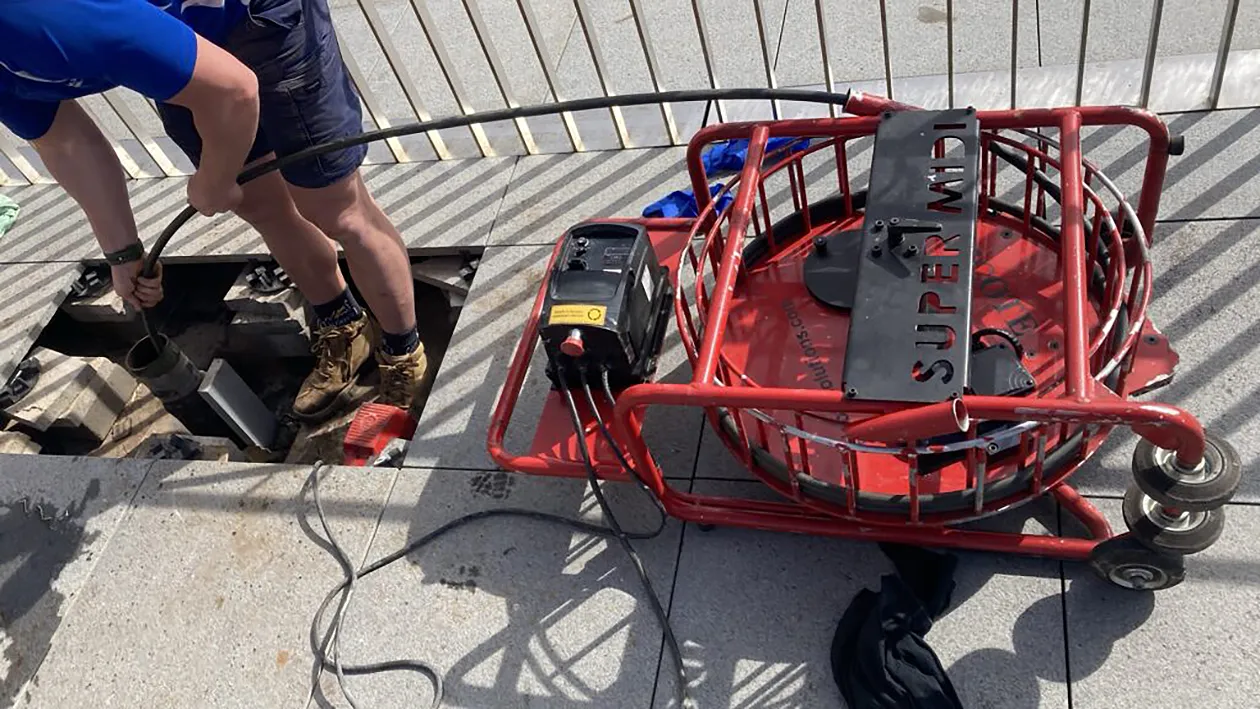
1. Cleaning and surface preparation. Every stack was cleaned back to bare pipe — rust, scale and sewer matter removed using Picote chains, sandpaper and high-pressure water blasting. Both relining and spray lining bond to the surface underneath, so anything left behind becomes a failure point later. We also cleaned the branch lines feeding each stack, which isn’t always included but makes a measurable difference to how well the finished surface seals.
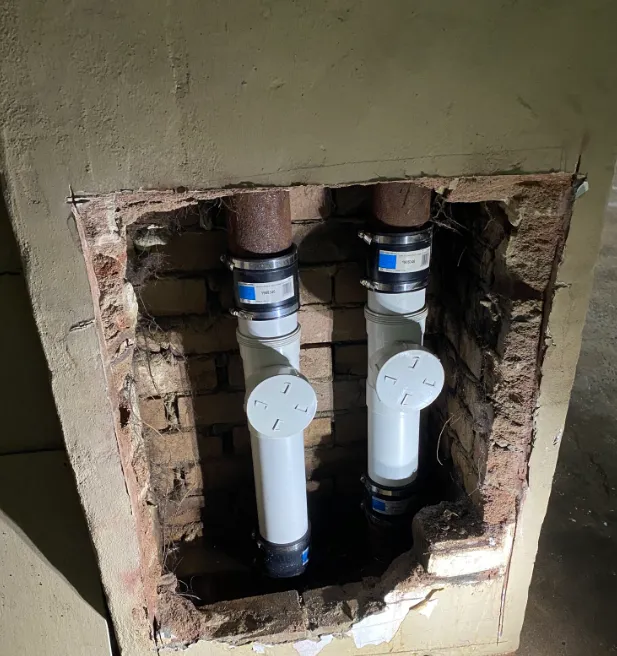
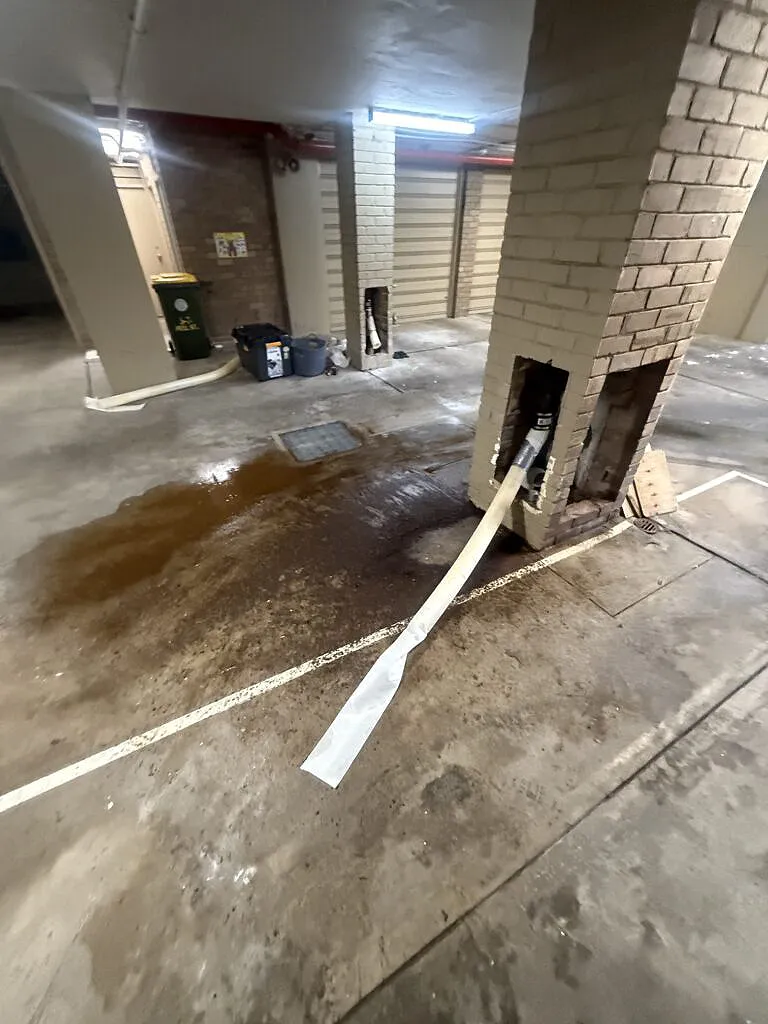
2. Relining the two failed stacks. The 100mm and 80mm stacks were fully relined from the top floor down to the open pipe in the car park, roughly 30 metres each. This seals every crack and leak along the run and puts a new jointless pipe inside the old one.
3. Reinstating 45 junctions. Every branch connection along both relined stacks had to be reopened so each unit’s fixtures drained normally again. Forty-five separate junction cuts across the two stacks, each one made from inside the pipe.
4. Spray lining the remaining five. The other five stacks were treated with a polyurethane spray-lining system, applying a smooth protective coating to the internal surface to resist further wear.
5. Inspection and sign-off. Each stack was inspected on completion against Australian plumbing standards, with working-at-height protocols monitored throughout.
The challenges
Two things set the pace on this job, and neither was the pipework.
The weather decided the schedule. The work could only be carried out in dry conditions, which meant progress was tied to the forecast rather than the crew. Six weeks on site is not six weeks of work, it’s the number of dry working windows it took to complete a job that would otherwise have run considerably shorter. Anyone quoting stack rehabilitation on a Sydney building through the wetter months should be building the same allowance in.
The height. Working the full vertical run of a multi-level building with limited access meant full fall-protection throughout, harnesses and secure anchor points at every position, with safety compliance monitored continuously rather than signed off once at the start.
Residents stayed in their units the entire time.
The result
All seven stacks rehabilitated, nobody relocated, no walls opened.
- Two stacks fully relined — every crack and leak along 30 metres of each sealed.
- Forty-five junctions reinstated — every unit connected to those stacks draining normally.
- Five stacks protected with a polyurethane internal coating against further deterioration.
- No demolition and no excavation. Bathrooms stayed in service, residents stayed put.
- WaterMark-certified liners and spray systems throughout.
- 50-year installation warranty on the relined stacks.
The relined stacks are jointless, which removes the cracking point that caused the original failure.
What it means if you have the same problem
Sewer stacks in older Sydney unit blocks tend to reach the end of their life together, and strata committees are usually first told the answer is replacement.
It rarely is. The useful question isn’t whether the stacks are old, it’s what condition each one is in individually. On this building two of seven needed relining and five needed coating, and the cost difference between those two answers across seven stacks is substantial. A committee that gets each stack assessed on its own condition is a committee that isn’t paying to reline pipes that didn’t need it.
If you’re weighing up a stack replacement quote, get the stacks inspected first. We camera them, tell you which ones need what, and you keep the footage to take to your committee.